Getting stranded on the side of the road is stressful, and the first question on everyone’s mind is always the same: “How long is this going to take?” Whether you’re dealing with a dead battery in a Walmart parking lot or a flat tire on Deerfoot Trail during rush hour, knowing what to expect can turn a panic-inducing moment into a manageable one.
If you’re searching for roadside assistance Calgary drivers can count on, this guide breaks down realistic response times, what affects them, and how you can help speed things up when you’re the one waiting.
The Short Answer: 20 to 45 Minutes on Average
For most calls to a professional towing service Calgary residents trust, help arrives somewhere between 20 and 45 minutes. Simple jobs like a battery boost or a lockout tend to land on the shorter end of that range, while heavy-duty recovery or a call during a snowstorm can push closer to an hour.
That said, average doesn’t mean guaranteed. A dispatcher who tells you 30 minutes is giving you an honest estimate based on truck location, traffic, and the nature of your problem, not a fixed promise. Understanding the variables behind that number will help you set realistic expectations every time you call.
What Actually Determines Arrival Time?
1. Your Location
Distance from the nearest available truck is the single biggest factor. If you break down in a well-covered area like downtown, the Beltline, or a busy commercial corridor, a Calgary tow truck is likely nearby and can reach you quickly. Break down on a rural road outside city limits, and you’re naturally looking at a longer wait simply because trucks have farther to travel.
2. Time of Day
Rush hour on Deerfoot, Glenmore, or Stoney Trail can add real minutes to any dispatch, even if a truck is technically close by. Late-night calls, on the other hand, often see faster arrivals because roads are clearer, even though fewer staff may be on shift.
3. Weather Conditions
This is a big one in Alberta. A clear July afternoon and a January whiteout are two completely different scenarios. Ice, snow, and poor visibility slow every vehicle on the road, including the one coming to help you, and they also increase call volume because more drivers are getting stuck at the same time.
4. Type of Problem
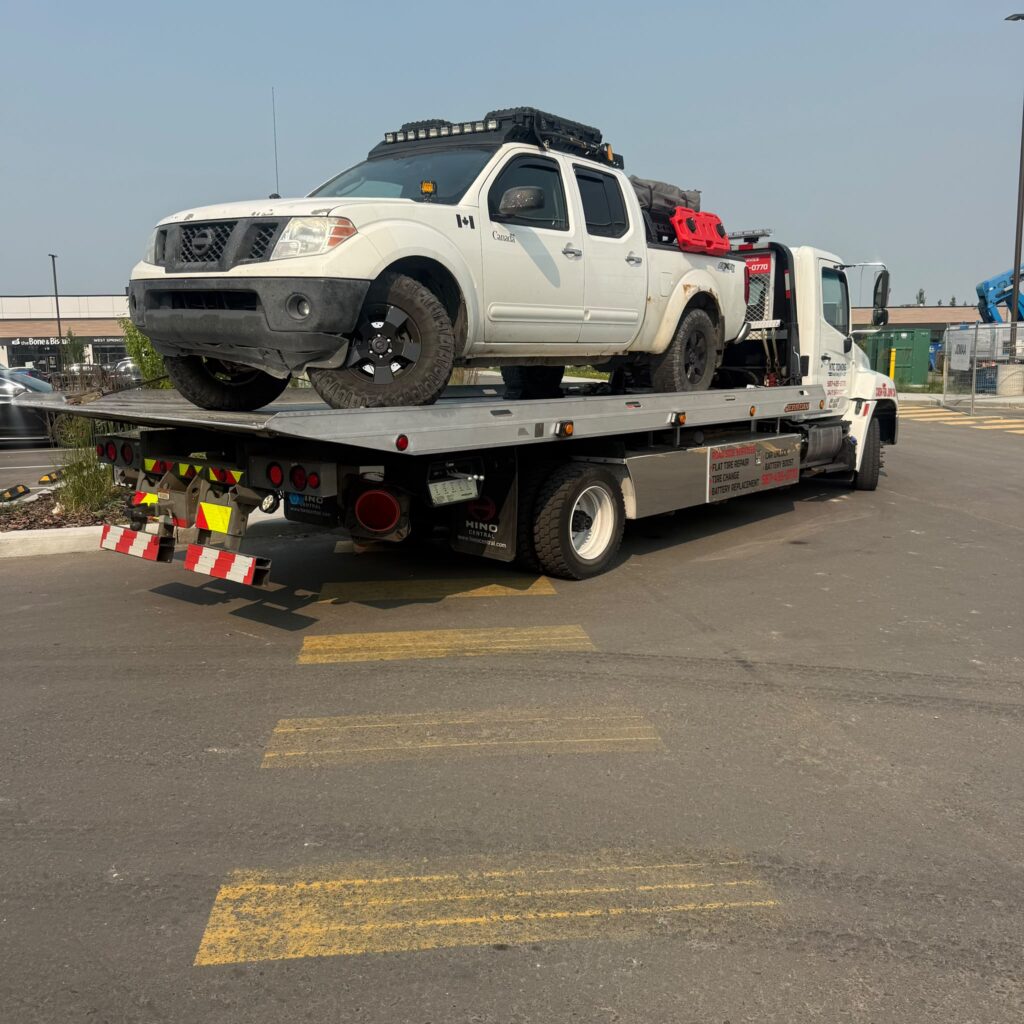
Not every roadside issue is equal. A quick jump-start or a spare tire swap can often be resolved on-site within minutes of arrival. A vehicle that’s fully off the road in a ditch, or one that needs a flatbed rather than a standard wheel-lift truck, takes longer to dispatch correctly because the right equipment has to be matched to the job first.
5. Call Volume
During major storms, extreme cold snaps, or icy morning commutes, every towing company in the city sees a spike in calls at once. This is when response times naturally stretch, simply because there are more stranded drivers than trucks on the road at that exact moment.
Typical Response Times by Situation
Here’s a general breakdown of what to expect for common issues when you call for roadside assistance Calgary wide:
- Battery boost or jump start: Usually 20–35 minutes, and the fix itself often takes under 10 minutes once the truck arrives.
- Flat tire change: Similar window, around 20–35 minutes, assuming you have a usable spare.
- Car lockout: Often on the faster end, since no special equipment is required, typically 15–30 minutes.
- Fuel delivery: Around 25–40 minutes depending on distance to the nearest gas station.
- Standard towing after a breakdown: 30 minutes or less in most Calgary neighborhoods under normal conditions.
- Winch-out or ditch recovery: Can run 30–60 minutes since recovery gear and sometimes a second operator are needed.
- Heavy-duty or accident recovery: Highly variable, often 45 minutes to over an hour, since these calls require specialized trucks and, in accident cases, coordination with police on scene.
Keep in mind these are general ranges. A reputable towing service Calgary company will always confirm a specific ETA when you call rather than leaving you guessing.
How to Get Help Faster
You can’t control the weather or rush-hour traffic, but there are a few things within your control that genuinely speed up response time:
Share your exact location. Use your phone’s GPS or a landmark, mile marker, or cross street. Vague descriptions like “somewhere on 16th Avenue” force the dispatcher to guess, and guessing costs minutes.
Describe the problem accurately. Telling the dispatcher exactly what’s wrong, dead battery, flat tire, stuck in a ditch, lets them send the right truck the first time instead of sending the wrong equipment and having to redispatch.
Move to safety first. If you can safely get your vehicle onto the shoulder or out of a traffic lane, do it. This isn’t just about speed, it’s about your safety while you wait.
Keep your phone charged and on. Dispatchers and drivers often call back to confirm details or update your ETA. A dead phone can genuinely delay help if they can’t reach you to confirm your exact spot.
Have your vehicle info ready. Make, model, and color help a driver spot your vehicle instantly in a busy lot or on a dark stretch of road, rather than circling around looking for you.
Why Response Time Varies Between Companies
Not all towing operators are built the same. Some run a small fleet spread thin across a huge coverage area, which naturally means longer waits no matter how good their intentions are. Others invest in a larger, well-distributed fleet with trucks stationed strategically across a city’s quadrants, which shortens the distance to almost any call.
When you’re comparing options for Calgary towing services, it’s worth asking directly: how many trucks do you run, and what’s your average response time? A company that can answer confidently, rather than vaguely, is usually the one that will actually show up when they say they will.
What a Realistic Roadside Call Should Look Like
A well-run dispatch call typically goes like this: you explain your location and the issue, the dispatcher confirms details and gives you an honest ETA, and a truck matched to your specific problem is sent out immediately. You should get updates if anything changes, not silence. This is exactly the standard KTC Towing works to deliver across every quadrant of Calgary, with an average arrival time around 30 minutes for most calls in the city.
Final Thoughts
There’s no single universal answer to how long roadside help takes, because so much depends on where you are, what’s wrong, and what’s happening on the roads at that moment. But as a general rule, 20 to 45 minutes is a fair expectation for most situations in Calgary, with simple fixes landing faster and complex recoveries taking a bit longer.
The best thing you can do while waiting is stay safe, stay reachable, and choose a tow truck Calgary service with a track record of honest ETAs rather than empty promises. Save a reliable number in your phone before you need it, because when you’re stranded, the last thing you want to do is search for help from scratch.
Frequently Asked Questions
Q: What is the average roadside assistance response time in Calgary?
Most calls are answered within 20 to 45 minutes, with many standard jobs like jump starts or lockouts resolved closer to the 20–30-minute mark under normal traffic and weather.
Q: Does weather really affect how fast help arrives?
Yes, significantly. Snow, ice, and low visibility slow down every vehicle on the road, including the tow truck coming to you, and also increase the number of people needing help at the same time.
Q: Why did my roadside assistance take longer than expected?
Common reasons include high call volume during storms, a vague location description, heavy traffic, or a job that required a different type of truck than originally requested.
Q: Can I speed up my wait time?
Sharing a precise location, accurately describing the issue, and staying reachable by phone are the biggest things you can do to help a dispatcher get the right truck to you as quickly as possible.
Q: Is roadside assistance available 24/7 in Calgary?
Reputable providers, including KTC Towing, run dispatch around the clock, 365 days a year, since breakdowns don’t stick to business hours.
Q: What’s the difference between roadside assistance and towing?
Roadside assistance covers on-the-spot fixes like jump starts, flat tire changes, lockouts, and fuel delivery. Towing is needed when the vehicle can’t be fixed on-site and has to be transported to a shop, home, or storage facility.
Q: Should I wait inside or outside my vehicle?
If you’re in a safe location off the road, staying inside with your seatbelt on and hazard lights running is generally safer than standing outside, especially on busy roads or highways.